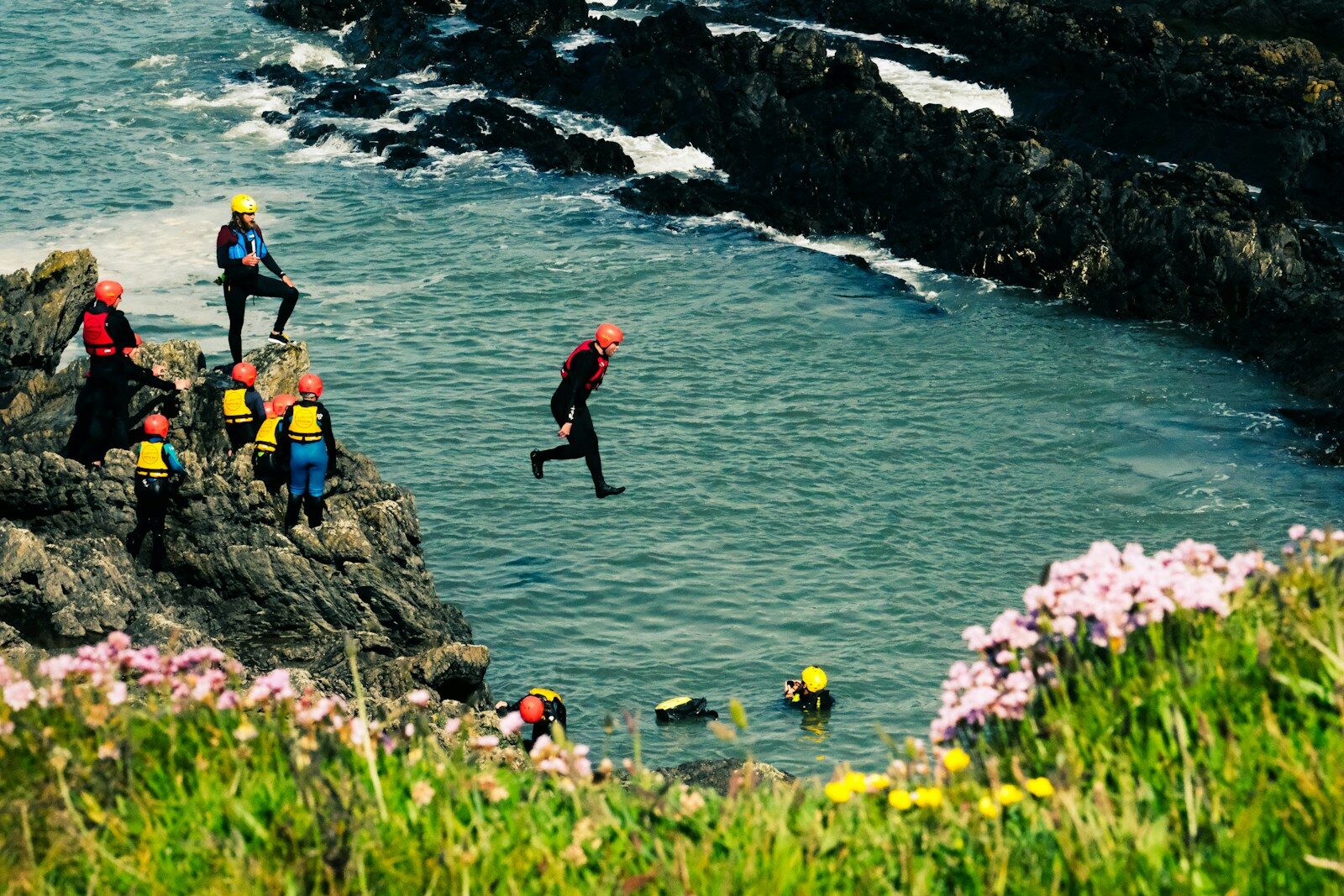
Picture yourself perched on a craggy granite outcrop, the roar of the Atlantic surging beneath your feet, nerves tingling in anticipation. With one bold jump, you splash into a swirling pool, come up for air, then haul yourself onto slippery rocks – ready for another round. That’s the wild experience of coasteering in Newquay, a unique adventure that goes far beyond what you might expect. Most people are surprised by how quickly fear melts into excitement, how the hidden sea caves reveal secret worlds, and how an afternoon out here leaves you eager for more.
Though Newquay is often known for its surfing, there’s something even more exciting happening along these shores. The region is a true hotspot for coasteering, and the dramatic cliffs, quiet coves, and hidden tunnels make it an unbeatable destination for this thrilling sport. Born in Wales in the 1980s and brought to Newquay soon after, coasteering is all about combining climbing, swimming, and leaping along the water’s edge. Groups like coasteering Newquay have turned it into a local specialty, offering tailored routes that highlight the very best (and wildest) that Cornwall’s coast has to offer.
The Experience: Beyond the Brochures
If you’ve ever seen a coasteering flyer promising massive jumps and dramatic scenery, you’ve only heard half the story. Instead of simply walking a path, you stay close to the ocean – scrambling over rocks, diving underwater, or floating calmly on the waves, feeling the real pulse of the sea. A typical outing might see you sliding into dark, echoing caves where the air mist from hidden blowholes, then swimming through the turquoise water as schools of fish race by.
What really sets coasteering apart, though, is the mental challenge. That first jump – whether off a small boulder or a towering ledge – is a true test of courage. Good guides understand this and start everyone off with easier routes, building up to more daring leaps for those who feel confident. Along the way, you’ll find every muscle working, from gripping barnacle-encrusted stones to powering through strong currents and squeezing through secret tunnels. Every trip is different, with the tide, wind, and weather changing the route each day.
And, of course, you’re sharing this untamed environment with curious seals, circling seabirds, and sometimes even playful dolphins. Newquay’s protected coves are a haven for all sorts of creatures, making each journey a chance to discover something new. Dependable guides watch the ever-changing sea and adjust plans on the go, keeping you in the safest, most exciting spots.
What Makes Newquay Special – and Sometimes Tough
What’s so special about Newquay? Much comes down to the rocks themselves. Newquay’s coastline is carved from thick, sturdy granite – perfect for both climbing and leaping. The cliffs are full of natural ledges and deep, inviting pools. Certain bays are protected from the roughest weather, providing safe places to explore even when the Atlantic is churning outside.
Still, this adventure isn’t a walk in the park. Even in July, the water is cool enough to send a shiver through your wetsuit. Barnacles can be sharp if you’re not careful, and sudden waves are always a possibility. Don’t expect to swap sandy beaches for these rocky stretches – you’ll be moving between boulders and navigating foamy channels at the edge of land and sea. Guides supply all the right equipment: thick wetsuits for warmth, helmets for bumps, and buoyancy vests for safety. Coasteering companies in Newquay, like Cornish Wave, are especially known for their patient instructors and careful planning for every group and ability.
Here’s a quick look at some favorite coasteering routes in Newquay:
| Spot | What You’ll Find | Jump Heights | Wildlife |
|---|---|---|---|
| The Gazzle | Tunnels, secret coves | 3-8 meters | Seals, cuttlefish |
| Porth Island | Sea caves, powerful blowholes | 5-10 meters | Dolphins, seabirds |
| Belly Flop Rock / Dead Man’s Cove | Beginner jumps, cave swims | 4-7 meters | Fish, barnacles |
| Witches Peak / Triple Jump | Ledges, fast whirlpools | 8-12 meters | Gannets, occasional seals |
| Ledge of Nerves | Tall, dramatic jumps | Up to 15 meters | Marine life, wild waves |
These are only a handful of the places you might visit – each trip unlocks new corners of the coast, some only known to expert locals.
Clearing Up the Myths
A few common myths about coasteering deserve to be set straight.
Myth 1: Only for the Brave. Actually, routes are customized for everyone – children, beginners, even those who are a bit uneasy. Guides are experienced at working with each group, so you can skip jumps or stick to easier sections if you want to.
Myth 2: Athletes Only. While you’ll get a good workout, you don’t need to be an Olympic swimmer or climber. The main requirement is a willingness to try. Each session is a few hours long, and the hardest part is usually getting over your nerves at the start.
Myth 3: Bad Weather Ruins Everything. Thanks to the shape of the coastline, there’s usually somewhere safe to go, even in strong winds or rain. Sometimes, wild weather makes for the best adventure!
Myth 4: It’s All About the Thrill. True, the adrenaline is real – but so is the awe of seeing seals up close or learning about Cornwall’s hidden history from your guides.
Safety always comes first. All reputable providers keep groups small, offer top-quality equipment, and have highly trained staff who know the area inside out. Feedback from thousands of happy visitors is proof that the experience is both thrilling and carefully managed.
What to Bring and What to Expect
When you’re getting ready to go coasteering, all you really need is a swimsuit, towel, and some old, sturdy shoes. The company provides everything else: wetsuits for warmth, helmets for protection, and floating aids for confidence in the water. There’s a short briefing on safety and signals, then the real adventure begins – climbing, swimming, and leaping along some of Britain’s wildest shoreline.
Afterwards, most people are grinning, exhausted, and full of stories. Back at the start point, a hot shower and a Cornish pasty are often waiting to help you warm up. The typical cost is between £40 and £70 per person, which is a bargain given the unforgettable memories you make.
Why People Keep Coming Back
What makes coasteering in Newquay so irresistible is not just the jumps or the scenery – it’s the feeling of discovery. You’re exploring secret places, slipping through caves untouched by most visitors, and seeing marine life from just a few meters away. The group you’re with often ends up feeling like a team, as everyone faces challenges and shares laughs together.
Environmentally, coasteering is a gentle way to interact with the coastline under careful supervision, raising awareness about the need to look after these precious landscapes. Many people fall in love with Newquay’s wild side and return repeatedly, each time finding a new stretch of hidden coastline to explore.
Ready to Try It for Yourself?
A day out coasteering in Newquay will show you a whole different side of Cornwall – its wild power, secret beauty, and the rush of jumping straight into adventure. No description or brochure can quite match the thrill of meeting a seal eye-to-eye or that moment of pride after you take a leap. For the best experience, join a qualified team like Cornish Wave, who’ll take you to unforgettable spots like Witches Peak or Belly Flop Rock, keeping you safe and smiling the whole way. If you’re ready to swap the beach towel for a real adventure, Newquay’s secret coast is waiting for you.